

How Does a Well Pump Work? Inside the Mechanics of Your Water System
If your home runs on a private well, there’s a good chance you’ve never given much thought to what happens between the moment water leaves the ground and when it flows out of your faucet. It seems almost automatic — and that’s exactly the point. A well-designed water system works quietly in the background so you never have to think about it.
But when something goes wrong — when pressure drops, water sputters, or the pump runs constantly — understanding how the system works suddenly becomes very important. This guide walks you through the core mechanics of a residential well pump system in plain, straightforward language, so you know what’s happening beneath your feet and inside your walls.
The Basic Job of a Well Pump
At its simplest, a well pump has one job: pull water from deep underground and push it into your home. That sounds straightforward enough, but achieving this reliably — at the right pressure, without interruption, and without wearing out the equipment prematurely — requires a carefully balanced system of components working together.
The two main types of residential well pumps are submersible pumps and jet pumps. Each operates on different principles, though submersible pumps have become the standard choice for most modern homes with drilled wells.
Submersible Pumps: Pushing Water Up from Below
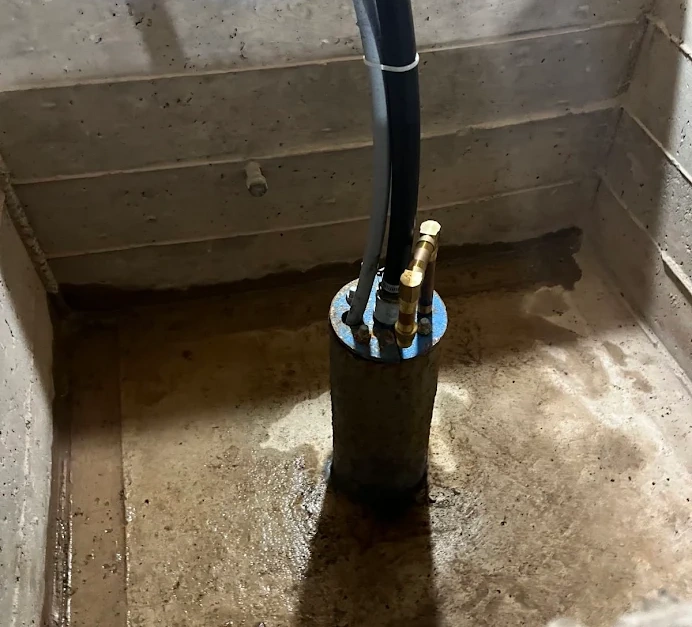
A submersible pump is installed directly inside the well casing, fully submerged in water. This positioning is one of its key advantages. Because the pump is already surrounded by the water it needs to move, it doesn’t have to work against the physics of suction the way a surface pump does.
Here’s how it works step by step:
- An electric motor at the base of the pump powers a series of impellers (rotating discs) stacked above it.
- As the impellers spin, they create centrifugal force that accelerates water outward and upward.
- The pressurized water travels through a sealed pipe that runs up through the well casing and into your home’s plumbing.
- A check valve near the pump prevents water from draining back down when the pump shuts off.
Submersible pumps are known for quiet, efficient operation and are well-suited to deep wells — often 25 feet or more below the surface. Because they’re sealed units designed to operate underwater, they require very little maintenance under normal conditions. Professional pump installation ensures the unit is properly sized for your well depth and household water demand, which is critical for long-term efficiency.
Jet Pumps: Pulling Water from the Surface
Jet pumps sit above ground — typically in a utility room or pump house — and use suction to draw water up from the well. They’re more common in older systems or shallow wells (generally less than 25 feet). While they’re simpler to service since they’re above ground, they’re less efficient for deep wells and can be affected by changes in air pressure. How to Tell If Your Well Pump Needs Replacing is a useful topic for homeowners with aging jet pump systems who want to understand when an upgrade makes sense.
The Role of the Pressure Tank
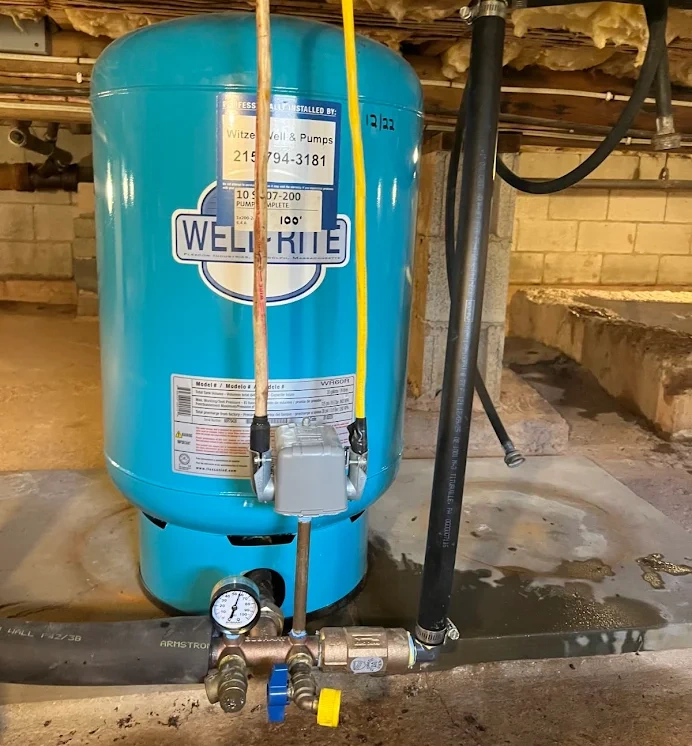
The well pump doesn’t work alone. Connected to it is a pressure tank — an often-overlooked but absolutely essential component of the system. Without it, your pump would have to switch on and off every single time you opened a faucet, which would wear it out in a fraction of its normal lifespan.
Here’s what the pressure tank actually does:
- Inside the tank is a rubber bladder or diaphragm that separates water from pressurized air.
- When the pump runs, water fills the tank and compresses the air inside.
- When you turn on a faucet, the compressed air pushes water out of the tank and through your pipes — without the pump needing to activate immediately.
- Once water pressure drops to a set “cut-in” point (typically 30 or 40 PSI), a pressure switch signals the pump to turn on and refill the tank.
This push-and-release cycle is what keeps water pressure consistent throughout your home. A properly sized and calibrated pressure tank protects the pump, reduces energy consumption, and smooths out pressure fluctuations that would otherwise be noticeable every time you turn a tap on or off.
Did you know? A waterlogged pressure tank — one where the air bladder has failed — is one of the most common causes of short cycling, where the pump turns on and off every few seconds. If you hear your pump clicking on constantly, the tank is often the first thing to check.
The Pressure Switch: Your System’s Control Center
Sitting between the pressure tank and your plumbing is a small but mighty device: the pressure switch. This component monitors water pressure in real time and acts as the automated trigger for your pump.
When pressure drops below the lower threshold (the “cut-in” pressure), the switch sends power to the pump motor. When pressure reaches the upper limit (the “cut-out” pressure), the switch cuts power and the pump stops. Common residential settings are 30/50 PSI or 40/60 PSI, meaning the pump turns on at the lower number and shuts off at the higher one.
A failing pressure switch can cause a pump to run constantly, refuse to start, or cycle erratically. It’s one of the components covered during a comprehensive system diagnostic evaluation, and it’s a relatively inexpensive fix when caught early.
Warning Signs That Something Is Wrong
Because the pump and pressure tank work together so closely, problems in one part of the system often show up as symptoms in another. Here are the most common warning signs that your water system needs attention:
- Low or inconsistent water pressure — Could point to a failing pump, a waterlogged tank, or a clogged intake screen.
- Air in the faucets or sputtering water — Often indicates the water level in the well has dropped, or there’s a crack in the drop pipe.
- Pump running constantly — The pressure tank may have lost its air charge, or the pump is undersized for demand.
- Clicking or rapid cycling — A classic sign of a waterlogged pressure tank.
- No water at all — Could be a tripped breaker, a burned-out motor, a failed pressure switch, or a dry well.
- Unusually high electric bills — A pump that’s struggling or cycling too frequently draws more power than a healthy system.
None of these symptoms should be ignored. What starts as a minor issue — like a slightly waterlogged tank — can accelerate wear on the pump motor and lead to a much more expensive repair. Scheduling a thorough well inspection at the first sign of trouble is always the smarter and more cost-effective approach.
How the Whole System Flows Together
Understanding each component individually is useful, but it helps to see how they function as a unit. Here’s the flow from start to finish:
- Step 1: Pressure in the tank drops as you use water, triggering the pressure switch.
- Step 2: The pressure switch activates the pump motor inside the well.
- Step 3: The pump draws groundwater through the well screen and forces it up the drop pipe.
- Step 4: Water enters the pressure tank, compressing the air bladder and raising system pressure.
- Step 5: When pressure hits the cut-out threshold, the switch shuts off the pump.
- Step 6: Pressurized water is ready and waiting in the tank, available on demand.
This cycle repeats dozens of times a day in most homes. A well-maintained system handles it invisibly and efficiently. When it falters, the cause can almost always be traced back to one of these six steps — which is why methodical well system troubleshooting is so valuable for pinpointing problems quickly.
Why Professional Installation and Inspection Matter
The mechanics of a well pump system are not overly complex, but the details matter enormously. Pump sizing, pipe depth, pressure settings, and tank capacity all need to be calibrated to your specific well and household — and getting any one of those wrong affects the entire system’s performance and longevity.
That’s why working with experienced professionals who specialize exclusively in well water systems makes a real difference. Choosing and installing the right pump for your home isn’t a one-size-fits-all decision. It requires an honest assessment of your well’s depth and yield, your household’s water demand, and the condition of your existing components.
Similarly, a thorough well system evaluation by a knowledgeable technician can catch early signs of wear before they become costly failures. Regular checkups are especially important for systems that are more than 10 years old or that show any of the warning signs described above.
When you have a clear picture of how your system works, you’re better equipped to notice when something is off — and to take action before a small issue turns into a major disruption to your home’s water supply.
Questions About Your Well System?
The Witzer Wells team specializes exclusively in well pump and pressure tank systems across Bucks County, PA and surrounding communities. If something feels off with your water, we’re here to help.
Frequently Asked Questions
What is a well pump and why is it important
A well pump is a mechanical device that moves groundwater from a private well into a home’s plumbing system. It works with a pressure tank and control switch to maintain consistent water pressure. Without a well pump, water from underground sources cannot reach household fixtures such as faucets, showers, and appliances.
How does a well pump work in a home water system
A well pump pushes or pulls water from the well into a pressure tank. When water is used in the home, the pressure inside the tank drops. Once the pressure reaches a preset level, a pressure switch automatically turns the pump on to refill the tank. When the tank reaches the correct pressure, the switch turns the pump off again.
What are the main components of a well pump system
A typical residential well system includes several important parts. These include the well pump, pressure tank, pressure switch, piping, and electrical controls. All of these components work together to deliver a steady supply of water to the home while protecting the pump from excessive wear.
What are the common types of well pumps
The most common types of well pumps are submersible pumps and jet pumps. Submersible pumps are installed deep inside the well and push water upward through the pipe. Jet pumps are usually located above ground and use suction to pull water from the well. Each type is designed for different well depths and water needs.